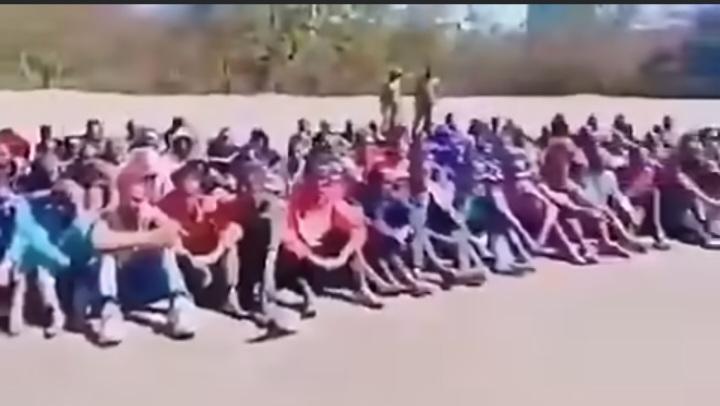
Mali's army has repelled a massive, coordinated attack by JNIM (Al-Qaeda-linked) and Tuareg rebels today 25th Aril , 2026, targeting the capital, Bamako, and multiple northern and central cities.
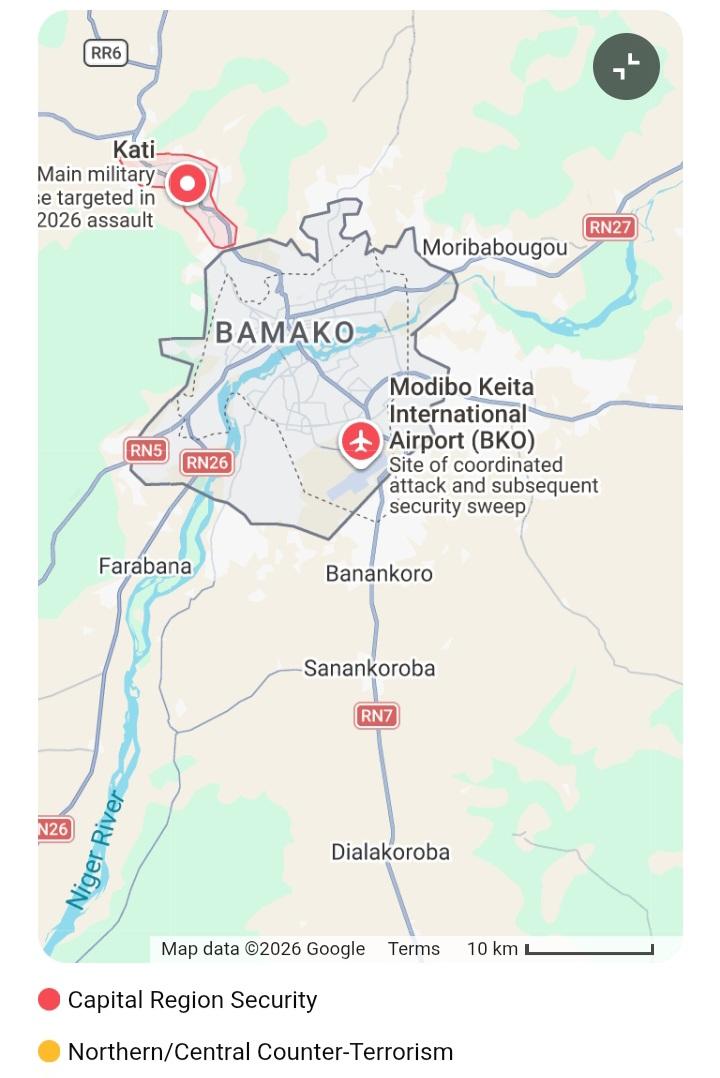
Following early morning explosions and gunfire at the Kati military base and Bamako International Airport, the army launched "large-scale sweep operations" to secure the capital and capture remaining assailants.
In a separate thwarted double-attack on the Timbuktu airport and military camp, Malian soldiers arrested 31 suspects and "neutralized" 14 terrorists during a violent exchange. Security forces utilize various tactical approaches to dismantle terrorist cells:
Recall that in an Intelligence-Driven Raids in June 2025, the military killed a senior ISIS leader, "Abu Darda," in the Chimame area based on "reliable intelligence". Another operation in March 2026 tracked suspects through coordinated intelligence efforts, leading to the arrest of six key operatives.
Aerial Surveillance & Strikes, the Alliance of Sahel States (AES) air forces frequently conduct strikes on terrorist training bases. For instance, in July 2025, strikes in the Segou and Menaka regions neutralized roughly 70 terrorists and destroyed logistics bases.
The army regularly conducts "sweeping operations" in rural villages, such as those in the Segou region in February 2026, where they seized weapons and communication equipment while neutralizing scores of fighters.
So the real lesson for Nigeria is not that Mali has “defeated” terrorism—but how it responds quickly under pressure and what gaps still remain. Here’s a grounded breakdown of what Nigeria can realistically learn:
- Quick Action to Terrorist Attacks
- Rapid, Coordinated Military Response
- Intelligence-Driven Operations (Not Just Firepower)
- Urban Security Preparedness
- Regional & Cross-Border Strategy
- Civilian Trust & Local Resistance
- Understand the Bigger Threat: Growing Terror Networks
Mali’s “victory” is tactical, not strategic.
Nigeria should not copy blindly but adapt key principles:
Speed + coordination
Actionable intelligence
Regional cooperation
Sustained pressure
Civilian-centered strategy
If anything, Mali’s situation is also a warning:
Even aggressive military responses don’t automatically end terrorism—they must be part of a broader, long-term strategy.

Leave a comment
Your email address will not be published. Required fields are marked *