EMULSION PAINT
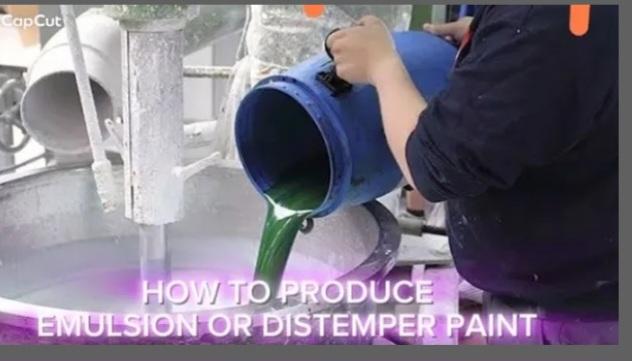
Emulsions are mixture of two substances that do not mix. One of the substances is dispersed on the other. Emulsions are not formed naturally and are generally unstable. Emulsion paints are produced by a process of EMULSIFICATION in which water, PVA and other additives are homogenously mixed together. Properties of
Emulsion Paints: Emulsion paints have fillers to thicken the, support the paint structure and increase the volume of the paint. Emulsion paints contain a lot of additives to impact various properties like anti-freeze, foam control, bacteria growth control.
PRODUCTION OF EMULSION PAINT
The required raw materials are as follows Water (H2O), Calcium trioxocarbonate IV (CaCO3), Biocide, Polyvinyl acetate (PVA), Hydrocellulose ether, Titanium dioxide, Calgon, Color pigments, Ammonia, genepur , defoamer etc
PROCEDURES IN PRODUCTION OF EMULSION PAINTS
Step 1 - pour clean water into an empty tank.
Step 2 - add calgon stir and empty the sac of titanium dioxide into the solution.
Step 3 - put on the electronic motor on, with it shaft deep into the tank for agitation and grinding of the tio2 particles. (Allow to grind for 30-45mins, until a fine solvent is obtain)
Step 4 -empty sacs of calcium trioxocarbonate IV (caco3) into the mixture, followed by the addition of water into the mixture to prevent the accumulation of the caco3 particles on the shaft.
Step 5- the introduction of additives is employed at this stage (i.e. the introduction of colour pigments if a specific colour is required apart from white,
step 6 - shading technology is introduced at this point if a specific color is needed apart from white for example we shade with iron (iii) oxide if a rock- view colour is required.
Step 7- polyvinyl acetate is added immediately as an emulsifier
Step 8 - a measured quantity of hydrocellulose ether is mixed with water and then poured to thicken the film, flowed with addition of genniple.
Step9 - biocide or formalin is then added to stop bacteria growth and defoamer or kerosene for foaming control.)
Step 10- addition of ammonia stir a few second and followed by packaging.
QUANTITY CONTROL IN PRODUCTION OF ECONOMY CLASS EMULSION PAINT.
In the production of emulsion paint, if 1 bucket is needed the following quantity of raw materials in the production.
Water = 10litres
TiO2 = 0.3kg
CaCO3 = 15kg
Biocide = 100gram
Calgon - 100gram
Defoamer or Kerosene = 100gram
Hydrocellulose ether = 100gram
PVA/Acrylic = 1kg
Ammonia = 100gram
Genepur = 100gram
If you want to watch a video illustration of it click on the link below:
https://youtu.be/0iIPBeO8Gvk?si=-EJAA1jxMLMmuOTH
To download our Basic paint formulation ebook click on the link below:

Leave a comment
Your email address will not be published. Required fields are marked *