
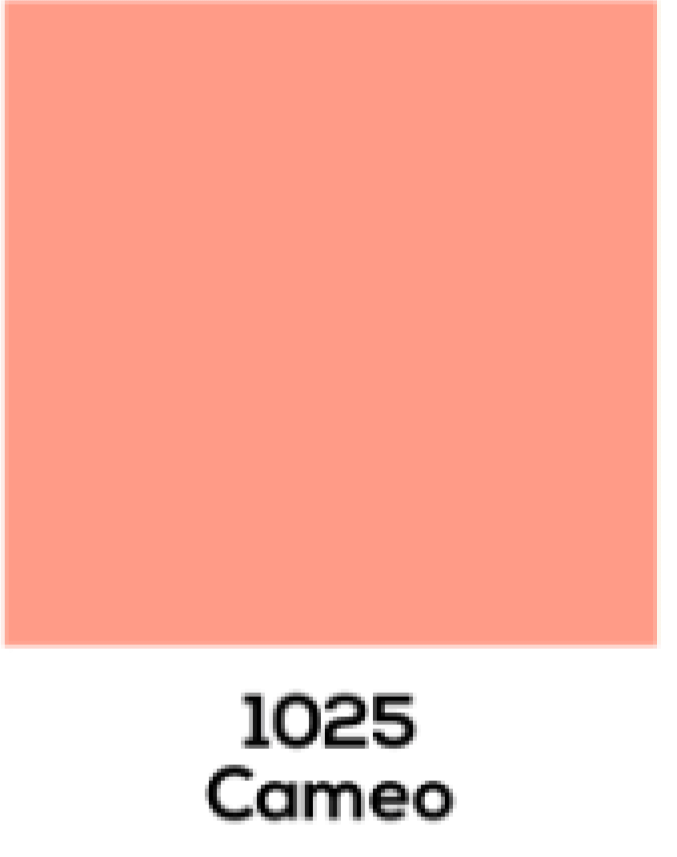
Cameo 1025 colour is generally a soft, muted, and warm tone. It is frequently used for interior and exterior paint to create a calm, sophisticated look, while variations can range from soft pinks to muted greens.
We have different shades of Cameo Colour: we have Cameo White/Cream which is a soft, antiqued cream or pale, muted white, often used in paint brands like Behr Cameo White and Benjamin Moore Cameo White.
We have Cameo Beige, which is described as a light, warm beige with low-chroma, providing a neutral, grounded feel.
We still have Cameo Green, which is a pale, muted turquoise-aqua with a soft, natural aesthetic.
Another one is Cameo Orange, which is soft, muted orange shade sometimes used in exterior paint combinations.
We have Cameo Pink, a warm, soft rose pink, reminiscent of the inside of a conch shell, which is the one we are producing with this measurement.
And cones the Cameo pink, which is often associated with romance. It symbolizes a sense of charm and enchantment. Cameo pink looks absolutely fabulous when paired with darker hues, such as charcoal grey and olive. It also pairs nicely with lighter hues, such as mauve and cream.
Use this measurement:
300g of titanium dioxide
50g of red oxide
100g of yellow oxide
Recall that this measurement is for a 20-liter bucket of emulsion paint. Any increase in titanium dioxide will alter the shade
PROCEDURES IN PRODUCTION OF CAMEO 1025 EMULSION PAINTS:
Step 1 - Pour clean water into an empty tank.
Step 2 - Add calgon stir and empty the sac of titanium dioxide into the solution. In this production, we are using 300g of titanium dioxide for a 20-liter bucket.
Step 3 - Put on the electronic motor on, with it shaft deep into the tank for agitation and grinding of the tio2 particles. (Allow to grind for 30-45 minutes until a fine solvent is obtained)
Step 4 - Shading technology is introduced at this point. In this production, we are using 50g of red oxide and 100g of yellow.
Step 5 - Empty sacs of calcium trioxocarbonate IV (caco3) into the mixture, followed by the addition of water into the mixture to prevent the accumulation of the caco3 particles on the shaft.
Step 6- The introduction of additives is employed at this stage (i.e., the introduction of colour pigments if a specific colour is required apart from white,
Step 7 - Acryli is added immediately as an emulsifier
Step 8- A measured quantity of hydrocellulose ether is mixed with water and then poured to thicken the film, flowed with addition of genniple.
Step 9 - biocide or formalin is then added to stop bacteria growth and defoamer or kerosene for foaming control.)
Step 10- The addition of ammonia stirs a few seconds and is followed by packaging.

Leave a comment
Your email address will not be published. Required fields are marked *