INTRODUCTION
Although paint is a very common material, paint technology is a complicated science. For paint to adhere to a surface, the first coat (normally the 'Primer') must provide a 'key' into the base material (so that paint does not just fall away) and to provide a surface for the other coats. There are many types of paint available today, some giving different surface finishes, others designed for particular applications. This makes the selection of paint less straightforward, however selecting the correct type of paint will give a more satisfactory end result. Choosing the correct paint may appear a bit confusing at first, but once you have sorted out which type of paint is for which job and what finishes are available for that particular type of paint, the choice should be fairly easy.
So, what is paint?
Paint consists of pigments and an oil or water- based binder (the binder being the majority in volume). With most paints, long-term storage will cause the two constituents to separate in the can - the pigments generally 'drop out of solution' to form a thick, treacle like sludge at the bottom of the can. For the paint to be usable, the contents of the can must be well stirred (except where the manufacturer says otherwise - as in the case of non-drip paints) to ensure that the pigments and the binder are uniformly mixed. If a stored can is used 'as opened' or even after just shaking, the paint at the top will be mainly 'binder' with very little colour, and by the time the brush reaches the bottom, the 'paint' will be mainly pigment – the whole effect will be from a very wishy-washy colour to a very rich colour. The proportion of pigment to binder in any paint dictates the amount of gloss the finished product will have.
The glossier the finish, the more hardwearing it will generally be. There are various categories of finish: matt, gloss and a range in between the two which varies according to the manufacturer and are designated in a number of different terms - silk, satin, semi-gloss, eggshell etc. Water-based paint dries purely by evaporation, while oil-based paint has a chemical drying agent added. Paints with a water base are not as hard or durable as those with an oil base although they are improving all the time. The greatest advantage of water- based paint is that brushes and rollers can be washed out in water; no special cleaning agent is needed. Most proprietary brands of household paints are ready for use as sold and do not, under normal circumstances, require thinning.
The general exception is where a thinned first coat is required to seal a surface. Where a can of paint has been opened for a period of time, some of the binder may have evaporated off so thinning of the remaining paint may be needed.
When thinning paint, only use the type of thinners recommended by the manufacturer. The following brief description of types, uses and application should help you to choose the right paint for the right job. Paint is liquids that solidify when exposed to air, and are used to cover surfaces for decorative and protective purposes. Paints are formed by mixing a pigment (the substance that provides colour) and a binder, a fluid vehicle, such as linseed oil, that solidifies when exposed to air.
Paint is any liquid which after application to a substrate in a thin layer is converted to an opaque solid film. Paint is composed of pigments, solvents, resins, and various additives. The pigments give the paint color; solvents make it easier to apply; resins help it dry; and additives serve as everything from fillers to anti- fungicidal agents.
Solvents are various low viscosities, volatile liquids. Additives serve many purposes. Some, like calcium carbonate and aluminum silicate, are simply fillers that give the paint body and substance without changing its properties. Paints are used in interior and exterior decoration of houses, prevention of rusting of metals, in the painting of boats, automobiles, planes, appliances, furniture, etc.
PAINT PRODUCTION
Paint is an essential commodity that does not just beautify but also serves as protective measures on a surface. Thus the demand and market of paints is at every environment at all time.
Paint is a material that is applied as a liquid and dries by a variety of chemicals processes to a solid form.
We apply paint for:
Decoration
Protection
Identification
Sanitation etc
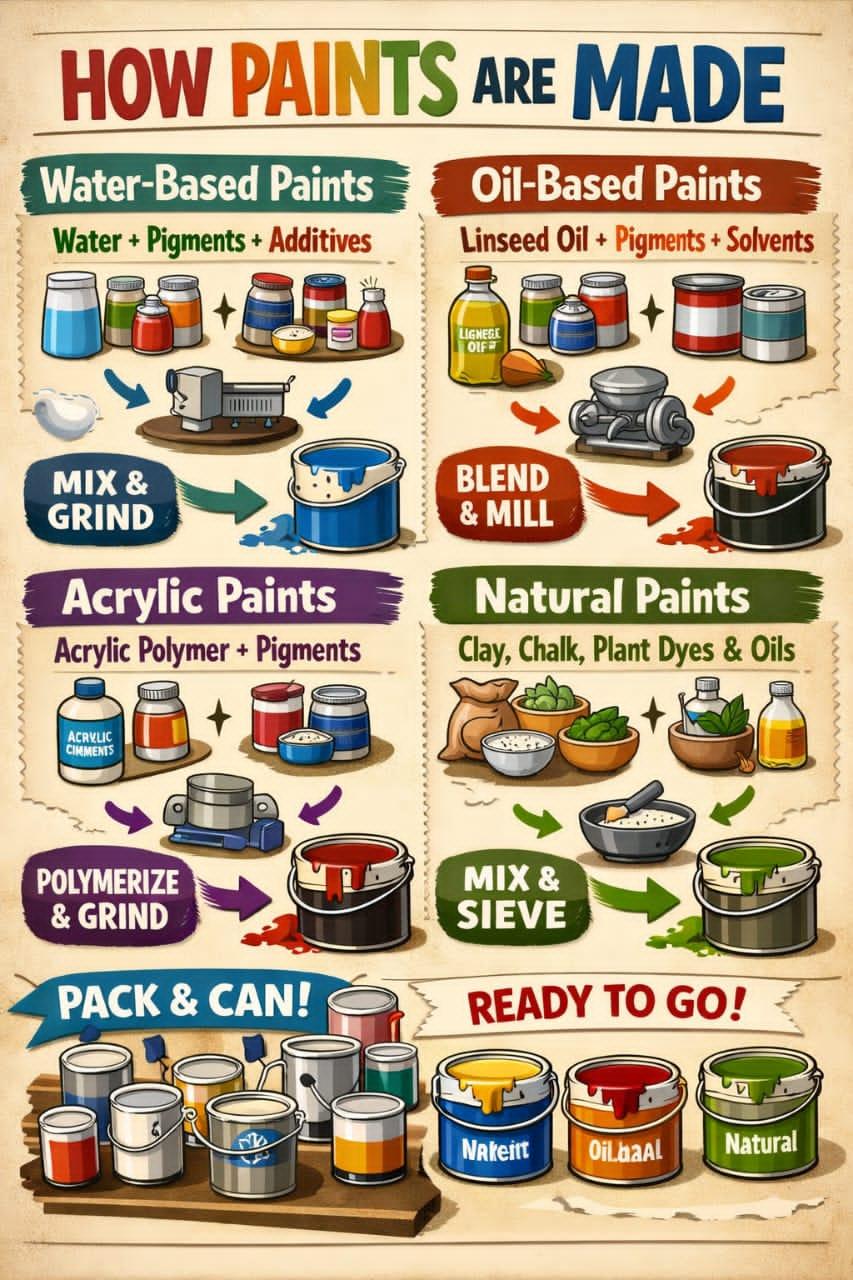
TYPES OF PAINT
1. Oil base paint
2. Water base paint
TYPES OF WATER BASE PAINT
Water base paints are paints that is been production with WATER as the solvent.
For the course of this training we shall be discussing about many different types of water base paints:
o Emulsion paint
o Textured paint
o Flextured paint
o Satin or nylon paint
o POP paint
o Matte Eggshell
o Flex coat
o Stucco
o Textured matte
o Marble effect
o Marble trowel
o Base coat
o Graffitex
o Screeding bound or wall putty
TYPES OIL BASE PAINT
Oil base paint are paints been produce with kerosene or petrol or toluene as the solvent and with akyld resin.
For the course of this training we shall be discussing about four different types of oil base paints:
o Gloss paint
o Varnish
o Undercoat
o Anti rust
CONSTITUENTS OF PAINT
SOLVENT: It increases the volume and serves as vehicle for the paint.
Chemicals:
o Water; for water base paints
o Petroleum solvent (kerosene); for oil base paints
RESIN: This is the binding and the forming part
Chemicals:
o Polyvinyl Acetate (PVA), Acrylic resin, Acrona PVA, Vinumal PVA; for water base paints
o Alkyd resin; for oil base paints
PIGMENTS/COLORANT: This gives the color and provides body to the paints
Chemicals;
o Pastes and oxides
o Titanium dioxide
ANTI FOAM: it helps to reduce or eliminate the foaming constituent in paint during production. It is only use for water base paints
Chemicals:
o Defoamer
o Kerosene
FILLER: It gives body to the paint. It is most constituent of water base paint. It is optionally use for oil base paints.
Chemical:
o Calcium carbonate
o Kaolin Clay
DISPERSANT: This chemical does not allow or reduce the tendency for solid materials in paint to settle at the bottom of the mixer during production and the bottom the package container, they also help in the spreading rate.
Chemicals:
o DELTA-DC® 4001 is cost-effective wetting and dispersing additive to improve pigment wetting and stabilize the pigment dispersion. It is a controlled flocculating agent and is therefore preferably used in primers and undercoats
o VISCOGEL® B4 is a rheological additive for solvent-borne systems of low to medium polarity that gives thixotropic effect, sag control, excellent levelling and prevents pigments from long-term storage settling. It is used in a wide range of manufacturing processes like oil based paints
o Genniple/glycol
o Calgon
BRIGHTENER: This chemicals helps to correct the dullness of paints, it helps to bring out the shining part of the paint, especially for white and light color paints. Not to be use for dark color paint production.
Chemicals:
o Aluminum silicate (for white color paint only)
o ∙ Hydrosol (for white and light color only)
THICKENERS: The helps in thickening the paint, it is only use for water base paints
Chemicals:
o Natrosol (most commonly use for water base paint
o Easy Gel (commonly use for oil base paint)
o Bama cork
o Acrytest
o G14
PRESERVATIVES: These are chemicals that kill micro organism like aglae, fungi; this does not allow grass/plant to grow on the surface at which the paint is applied.
Chemicals:
o Anticide
o Biocide
o Formalin
DRIERS: These are catalyst which carries oxygen into the paint and makes it dry through oxidation, polymerization and condensation.
Chemicals:
o Texanol; for water base paint
o Mixed drier, Cobalt, lead; for oil based paint
MODULES OF THE TRAINING
For the purpose of the training we shall be discussing on the follow sections:
The various chemicals use in paint production
The individual quantities of each chemical that make a bucket of paint
The procedures use in chemical mixture to produce a quality paint
The various equipment and tools use in paint production
The marketing strategic for new paint producers
General guidelines for paint production.
CHEMICALS AND THEIR FUNCTIONS
WATER: Serve as solvent for water base paint
KEROSINE OR PETROLEUM OR TOLUENE: serve as solvent for oil based paint.
TITANIUM DIOXIDE OR TITAN: Act as white pigment. It’s necessary in all other colors in various lower quantities; it makes paint to be brighter and coverage
ACRYLIC OR ACRONAL PVA OR VINAMUL PVA: Binder for water base paint and it is the chemical that is tells the quality of your paint because with adequate quantity it prevent your paint from staining (chalking or rubbing off easy, that is when been toughed after painting the wall will not stain your finger)
ALKYD RESIN: binder for oil base paint
NATROSOL: thickens the paint and prevents the pigments from settling down.
GENNIPLE OR GLYCOL: act as dispersants that helps pigments to Repel each other and scatter well in paint and does not allow the other chemicals to settle down.
BUFFER/AMMONIA: makes thickener react fast.
ACTICIDE OR SODIUM BENZOATE: preserves paint.
DEFOAMER: reduces foaming in paint
CALCIUM CARBONATE: is filler, giving the paint body.
MIXED DRIER: act as a drying agent for oil base paints.
SOYA LECITHIN: serve as a dispersant and allow for easy flow of paint on the Wall
ANTI SKIN (MEKO): serves as anti skin and anti caking agent
ALUMINIUM SILICATE: it is use for white paint only and it serves as a brightener
MARBLE DUST (SMOOTH OR ROUGH): it gives texture to the paint
HYDROSOL: it is use to correct dullness in white color paint.
CALGON: it helps the paint mix properly, blend the colours and titanium dioxide.
REQUIRED TOOLS TO START A SMALL SCALE PAINT BUSINESS
To start a paint production business you don’t need much but the following.
1. Space for production
2. A small mixing machine, we normally use a drilling machine with a abricated shaft at the end so that it mixes properly.
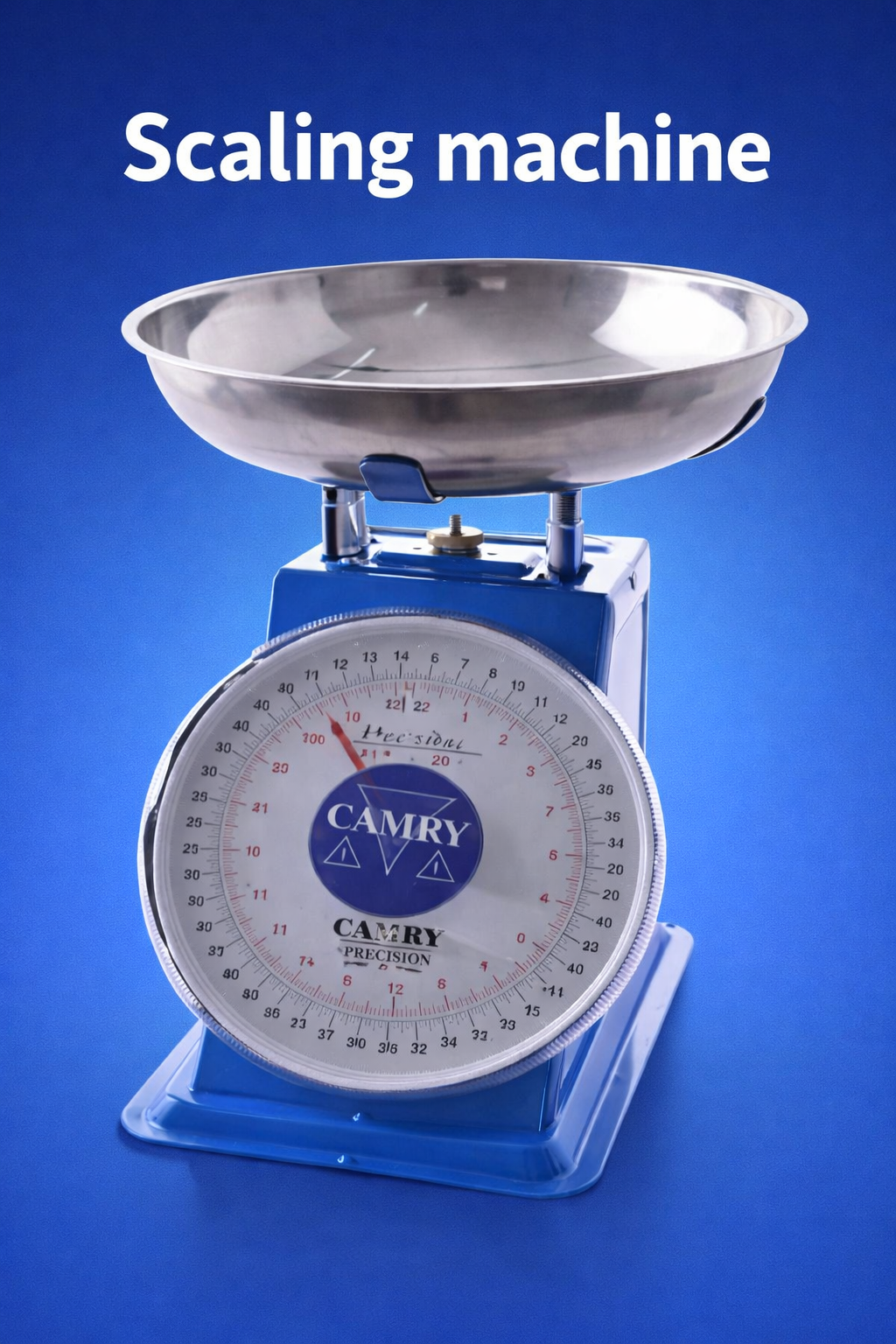
3. Measuring scale; analog or digital. To take accurate measurement of the chemicals.
4. A mixing drum; big enough to contain the required quantity you want to produce. See picture below, you can start with this size or bigger one.
5. Packaging contain or paint buckets labeled in your brand name to package your product for sell, but you dont need it if you are producing and paint with it immediate on site.
6. Measuring cylinder to measure all chemicals in liquid form but you can still use your measuring scale in absent of it.
7. Protective wares or laboratory wares like hand gloves, lab coat, but all these are optional because the chemicals are
not that harmful.
GENERAL GUIDELINES BEFORE AND DURING PRODUCTION
1. Always measure all your chemicals adequately down before starting the production so that it speedy up your production
2. Always pre-disperse your color oxide with water to form a paste in a separate bowl before adding it to your production to avoid lumps but this only done when you are producing water base paints because u dont need to pre-disperse paste color for oil base paints,
3. Always pre-disperse your Natrosol with at least 1kg of water before adding it to your production to avoid lumps and easy mixture too.
4. Note you dont use aluminum silicate for color paints because it will kill off the color that is no matter the amount of color you add your paint might still remain white or the color will be light, will not get the desire deep color. For any white color paint productions use 1kg of it.
5. Note you don’t buy white color from the market, if you want to produce white color paint, all the chemicals needed are already in white form so that will automatically give you a white color paint.
6. Calcium carbonate have two types off white and pure white’ always use pure white only for white color paints and off white or pure white for color paints, because if you use off white for white color paint your product will not be bright.
7. Always use the accurate quantity of each chemicals to obtain a quality products 8. Never miss up water base paint chemicals for oil base paint chemicals.
9. BUFFER is an optional chemical in paint production, so it is not every chemical seller that knows it, so if you don’t get it, your product will still be perfect without it.
QUALITY CONTROL MEASURES
1. LUMPS IN YOUR PRODUCT: To avoid lumps in your production like emulsion paint, you must disperse the Natrosol very well and make sure you add thickening agent before adding ammonia and formalin, they should be the last chemicals to add
2. LIGHT PRODUCT: To increase the thickness of your product during production, you will have to increase the quantity of the Natrosol.
3. WATER AT THE SURFACE OF PRODUCT: To avoid seeing water on the top of your product after sometime after production, you will have to increase the quantity of the Genniple.
4. DUSTING OR STAINING OR CHALKING PRODUCT: To avoid your
product staining after applying it on the wall, you will have to increase the quantity of the binder (PVA or Acrylic binder).
5. PRODUCT GETTING SPOILT EASILY: If your product got bad within a short time of storage, you will have to increase the preservative chemical and always use quality thickening agent.
6. LOW SHINNING SATIN PAINT: make sure you use the HIGH GRADE ACRYLIC RESIN which is different from the normal acrylic for emulsion. (Note: when buying acrylic resin for satin, make sure you tell the seller that you need it for satin production, so that he give you high grade one.)
HOW TO BUY CHEMICALS.
Make sure you tell the chemical seller, what you need the chemical for, because we have many chemicals with same name but different grade for different products.
ABOUT THE MARKET
In this industry, there are key features that all the producers choose in order to establish themselves in the market. The features are as follows:
1. Product quality
2. Customer services
3. Product color specialization
ROLE TO CHOOSE IN THE MARKET CHAIN
1. Manufacturing and application
2. Manufacturing and distribution
3. Manufacturing for distributors
FACTORS THAT AFFECT PAINT SALES
1. Low quality
2. Poor advertisement/marketing
3. Poor packaging
4. Competitors price
HOW TO MARKET YOUR PRODUCT
There are different strategies to employ in marketing your product
1. Sourcing for an independent marketer
2. Opening personal paint depot
3. Introducing your product to the association of painters within your community
4. Visit cooperate organization that paint on regular bases and introduce your product to them e.g. banks, hospitals etc.
5. Meeting site engineers and construction companies
6. Giving out business cards and flyers at public places
7. Advertisement
EMULSION PAINT
Emulsions are mixture of two substances that do not mix. One of the substances is dispersed on the other. Emulsions are not formed naturally and are generally unstable. Emulsion paints are produced by a process of EMULSIFICATION in which water, PVA and other additives are homogenously mixed together.
Properties of:
Emulsion Paints: Emulsion paints have fillers to thicken the, support the paint structure and increase the volume of the paint. Emulsion paints contain a lot of additives to impact various properties like anti-freeze, foam control, bacteria growth control.
PRODUCTION OF EMULSION PAINT
The required raw materials are as follows Water (H2O), Calcium trioxocarbonate IV (CaCO3), Biocide, Polyvinyl acetate (PVA), Hydrocellulose ether, Titanium dioxide, Calgon, Color pigments, Ammonia, genniple , deformer etc
PROCEDURES IN PRODUCTION OF EMULSION PAINTS
Step 1 - pour clean water into an empty tank.
Step 2 - add calgon stir and empty the sac of titanium dioxide into the solution.
Step 3 - put on the electronic motor on, with it shaft deep into the tank for agitation and grinding of the tio2 particles. (Allow to grind for 30-45mins, until a fine solvent is obtain)
Step 4 -empty sacs of calcium trioxocarbonate IV (caco3) into the mixture, followed by the addition of water into the mixture to prevent the accumulation of the caco3 particles on the shaft.
Step 5- the introduction of additives is employed at this stage (i.e. the introduction of color pigments if a specific color is required apart from white,
step 6 - shading technology is introduced at this point if a specific color is needed apart from white for example we shade with iron (iii) oxide if a rock- view color is required.
Step 7- polyvinyl acetate is added immediately as an emulsifier
Step 8 - a measured quantity of hydrocellulose ether is mixed with water and then poured to thicken the film, flowed with addition of genniple.
Step9 - biocide or formalin is then added to stop bacteria growth and defoamer or kerosene for foaming control.)
Step 10- addition of ammonia stir a few second and followed by packaging.
QUANTITY CONTROL IN PRODUCTION OF ECONOMY CLASS EMULSION PAINT.
In the production of emulsion paint, if 1 bucket is needed the following quantity of raw materials in the production.
Water = 10litres
TiO2 = 0.3kg
CaCO3 = 15kg
Biocide = 100gram
Calgon - 100gram
Defoamer or Kerosene = 100gram
Hydrocellulose ether = 100gram
PVA = 1kg
Ammonia = 100gram
Genepur = 250gram
If you're interested in learning more of these paints production like:
Middle class and executive class of the following paints:
Emulsion paint
Silk/satin paint
Matt paint
Textcoat paint
Wall putty
Oil/gloss paint
Watch the full video here:
https://youtu.be/RLTNCYtgMx8?si=z7sKs2yRlnmvUzOZ

Leave a comment
Your email address will not be published. Required fields are marked *